
0.96″ Inch I2C OLED Display Blue (SSD1306)
Sale!

Display
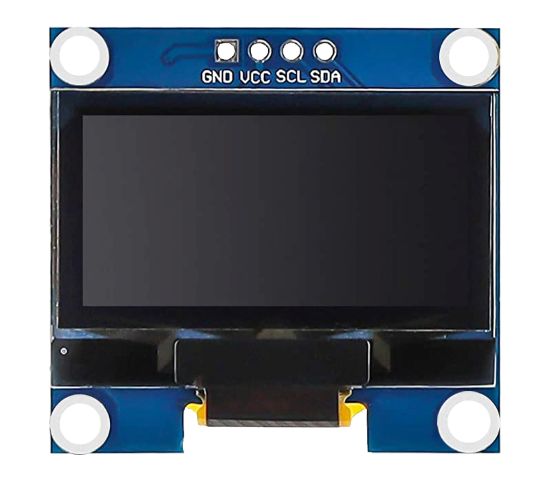
0.96″ Inch I2C OLED Display Blue (SSD1306)
Original price was: 360.00৳ .280.00৳ Current price is: 280.00৳ .
The SSD1306 I2C OLED display module operates by controlling an OLED (Organic Light-Emitting Diode) display using the powerful single-chip CMOS OLED driver controller, the SSD1306. This controller manages all RAM buffering and demands minimal effort from the connected microcontroller, such as an Arduino. OLED displays are renowned for their extremely light and potentially flexible nature, producing brighter and crisper images compared to traditional displays due to being almost paper-thin.
The main advantage of an OLED Display is that it emits its own light and doesn’t need another source of backlight. Due to this, OLED Displays often have better contrast, brightness and viewing angles when compared to LCD displays.
Another important feature of OLED Displays is deep black levels. Since each pixel emits its own light in an OLED Display, to produce black color, the individual pixel can be turned OFF.
Due to lower power consumption (only pixels which are lit up draw current), OLED displays are also popular in battery operated devices like Smart Watches, Health Trackers and other wearables.
- VIN: This is the power pin.
- GND: Common ground for power and logic.
- SCL: The serial clock pin for the I2C interface.
- SDA: The serial data pin for the I2C interface.
| 0.96" Inch I2C OLED Display | OLED, Display, arduino, 0.96" Inch I2C OLED Display |
|---|
Related products
-
Sale!
 Sensors
Ultrasonic Transducer Waterproof Distance Measuring Sensor Module
Original price was: 650.00৳ .580.00৳ Current price is: 580.00৳ . Add to cart -
Sale!
 Sensors
BH1750FVI Digital Light intensity Sensor
Original price was: 425.00৳ .380.00৳ Current price is: 380.00৳ . Add to cart -
Sale!
 Display
1.3 Inch I2C OLED Display Module 4pin
Original price was: 550.00৳ .455.00৳ Current price is: 455.00৳ . Add to cart -
Sale!
 Drivers
Motor Shield L293D
Original price was: 250.00৳ .225.00৳ Current price is: 225.00৳ . Add to cart -
Sale!
 Development Boards
Arduino Due
Original price was: 3,250.00৳ .3,050.00৳ Current price is: 3,050.00৳ . Add to cart
Reviews
There are no reviews yet.